
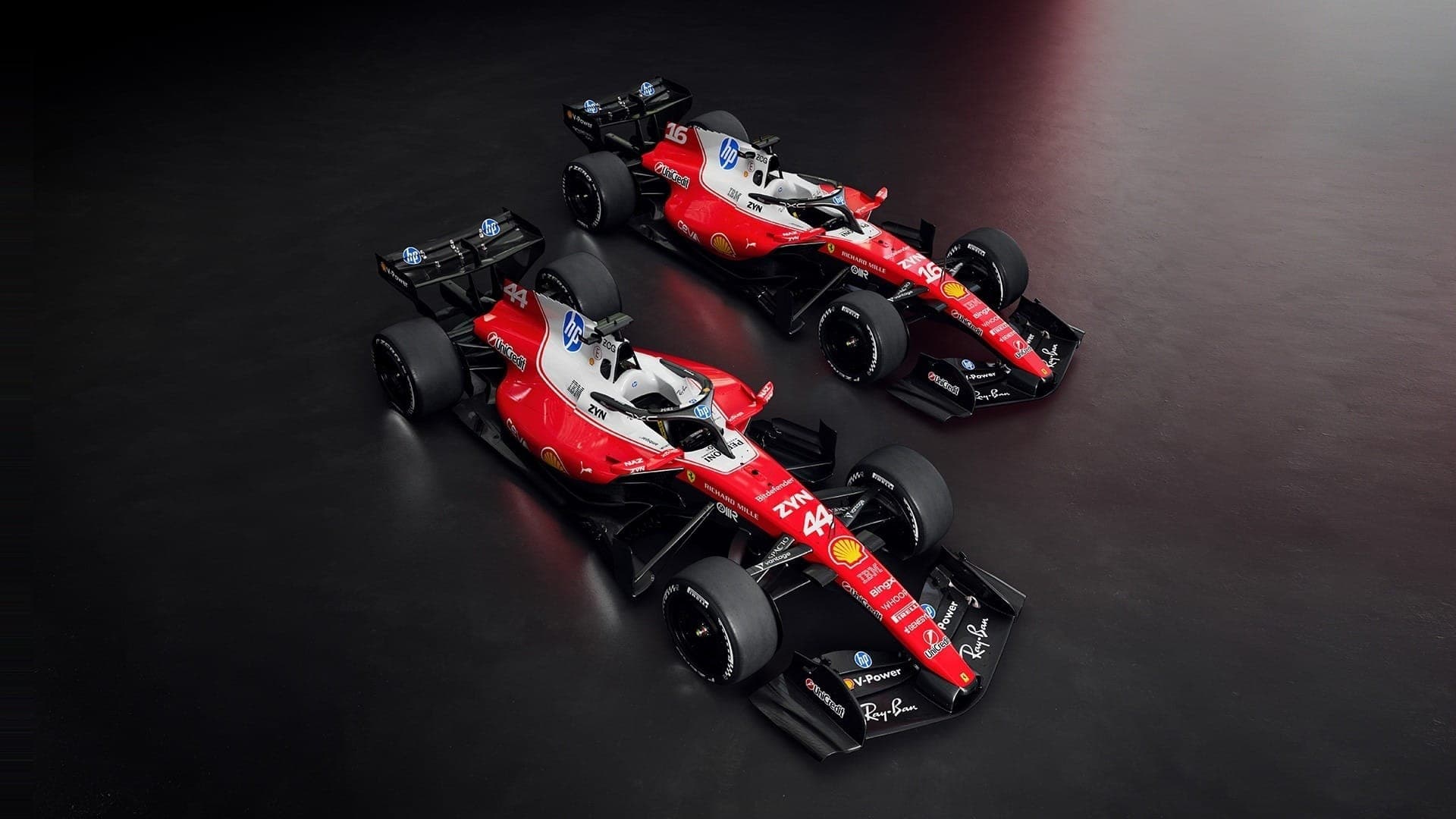
F1 vs IndyCar: Which Series to Watch?
American sports fans are asking a real question right now: F1 vs IndyCar, which series actually earns your Sunday? Formula 1 gained a massive new audience, boosted by Netflix's Drive to Survive, filled stadiums in Austin and Las Vegas, and turned drivers into global celebrities. But IndyCar has deep American roots stretching back over a century, the Indianapolis 500 first ran in 1911, the Indy 500 fills 300,000-plus seats every May, and the racing is absolutely wild. So if you're building your motorsport viewing schedule for 2026, which series deserves your time?
The honest answer is that Formula One and IndyCar represent two entirely different philosophies about what makes racing compelling. One is a global engineering arms race staged across 24 countries. The other is a spec-chassis, pack-racing spectacle with deep American roots. Both have real claims on your attention. What this open-wheel racing comparison will give you is the data and framework to pick the one that actually matches how you watch sports.
We're going to cover speed, technology, race strategy, fan experience, and cost of entry, so by the end, you'll have a clear answer rather than a vague "it depends."
F1 vs IndyCar: Which Series Is Actually Faster?
Which car is fastest depends entirely on what track you're standing at. F1 cars exceed 200 mph on road circuits like Monza and Spa. IndyCars hit 235, 240 mph at Indianapolis Motor Speedway. If you're measuring top speed in a straight line on a superspeedway, an IndyCar pulls clear of an F1 car. If you're measuring cornering speed and lap time on a road course, F1 wins cleanly.
The reason comes down to aerodynamic philosophy. An F1 car generates massive downforce, which is what allows it to carry speed through corners at G-forces that strain a driver's neck. The 2026 F1 regulations introduced active aerodynamics with two distinct modes: "Corner Mode" closes the wing flaps to maximize grip, while "Straight Mode" opens them to shed drag and hit top speed. Total power output exceeds 1,000 hp from a 1.6-liter turbocharged V6 combined with a 350 kW MGU-K hybrid system.
IndyCar runs a 2.2-liter twin-turbo V6 producing 550, 750 hp under normal conditions, with push-to-pass delivering an additional 50 hp burst on demand. The 2026 season added hybrid energy recovery capable of stacking with push-to-pass for peak outputs near 850 hp. That's an impressive number, but it's the oval configuration where IndyCar truly shines: low-downforce setups, high boost settings, and 33 cars drafting at 235 mph in a pack. The closest historical apples-to-apples comparison comes from Champ Car testing, IndyCar's predecessor, where an F1 car recorded a 1:05.78 against the Champ Car's 1:05.88 on the same road course. F1 had the edge, but barely. On a superspeedway, that equation reverses completely.
Car Technology: Custom-Built Machines Versus Spec Racing
This is where the two series diverge most sharply, and understanding this difference changes how you watch every race. F1 teams build their own cars from scratch. Chassis engineering, aerodynamic development, and, for works teams, power unit development all happen in-house. The 2026 F1 cars weigh a minimum of 768 kg including the driver, measure no more than 3,400 mm in wheelbase, and run on 18-inch Pirelli tires that are narrower than their 2025 predecessors to suit the lighter, more agile package. Annual development budgets under the 2026 cost cap sit at $215 million for performance-related expenses, excluding driver salaries, marketing, and travel. Total operational spend at the top teams runs well north of $350 million per year. For additional context on the rule changes and technical direction in 2026, see this commentary on the 2026 F1 regulations.
IndyCar operates on a fundamentally different model. Every team races a standardized Dallara chassis with a choice of Honda or Chevrolet engines. The aero package changes depending on track type: higher downforce for road and street circuits, lower downforce for oval speed runs. There is no cost cap, but the spec model makes one unnecessary. A two-car IndyCar team typically spends $14, 20 million per year, a fraction of what a midfield F1 operation spends on car development alone.
F1 rewards engineering ingenuity above all else. When a team finds a technical advantage in a regulation gray area, the performance gap can grow to substantial fractions of a second per lap or more across a race distance. IndyCar's spec chassis compresses that competitive spread dramatically, which produces closer racing but removes the technical subplot entirely. Neither approach is wrong. They're just different promises. F1 sells you the engineering battle as much as the sporting contest; IndyCar sells you the drivers.
Race Format and Strategy: Where the Rules Change Everything
One of the most practical differences between these two series sits in the pit lane. IndyCar allows refueling during pit stops, which makes fuel conservation a live variable across the entire race. Teams can extend stints to build a strategic gap, or time a stop around a full-course caution to gain track position without losing time. The caution period is a genuine equalizer: when a yellow flag flies, the pit lane closes temporarily, the field bunches up, and strategy resets. It creates chaotic, high-drama moments that American fans used to NASCAR will recognize immediately.
F1 banned refueling in 2010. Cars start with a full fuel load and shed weight across the race, which itself changes lap times. Strategy in F1 revolves almost entirely around tire compounds, degradation management, and stint planning. Pirelli supplies soft, medium, and hard compounds plus wets and intermediates, and teams are required to use at least two different dry compounds per race. Each driver receives a fixed tire allocation across the entire weekend and must budget that supply across three practice sessions, qualifying, and the race. F1 tire strategy is one of the sport's most compelling layers, it's the area where strategic calls visibly win or lose races in real time.
Qualifying formats differ just as sharply. F1's three-knockout format (Q1, Q2, Q3) eliminates slower cars progressively and builds tension across a single session. IndyCar uses simpler one-shot formats at most events, but the Indy 500 qualifying is its own multi-day spectacle: initial runs fill 33 grid spots, the fastest 12 advance, the fastest 9 compete for pole, and qualifying points are awarded separately.
F1 races run a minimum 305 km. IndyCar races range from 200 to 500 miles, with the Indy 500 paying double championship points. Push-to-pass in IndyCar and DRS in F1 both solve the same problem: making overtaking easier on circuits where dirty air kills following cars. DRS activates automatically within one second of the car ahead in designated zones, opening the rear wing slot for straight-line speed. Push-to-pass gives IndyCar drivers a button on the steering wheel for roughly 50 hp of extra power, available on road courses but not ovals. Both systems increase passing rates, though the mechanism and feel are completely different from the driver's seat.
F1 vs IndyCar Fan Experience: What You Actually Get as a Spectator
The Indy 500 is the world's largest single-day sporting event. Over 300,000 fans pack Indianapolis Motor Speedway every May, with attendance records approaching 375,000. The oval format creates pack racing where 20-plus cars run within a second of each other at 220-plus mph, and cautions can compress the field and reset the race multiple times in a single afternoon. Street circuits in Nashville, Long Beach, and Detroit bring the action into urban American environments. With 15 of IndyCar's 17 races held in the United States in 2025, domestic fans face minimal travel and a calendar that runs spring through fall. For a concise historical overview of the championship and its evolution, see the IndyCar Series overview.
F1's 2026 calendar includes three American rounds: Austin's Circuit of the Americas, Miami, and Las Vegas. COTA draws over 430,000 fans across its three-day weekend, making it one of the largest F1 events globally. A Grand Prix weekend runs with distinct rhythm: free practice on Friday, qualifying on Saturday, the race on Sunday. The atmosphere is markedly different from IndyCar. The gaps between cars are larger, but strategic layering and the global championship narrative give each race a weight that extends beyond the lap count. Major US Grands Prix events like COTA and Las Vegas have sold out well in advance in recent years, and ticket prices reflect that demand: COTA three-day general admission starts around $389, Miami at $430, and Las Vegas averaging $617 for GA with grandstands starting at $925.
IndyCar is arguably easier to follow on first watch. The action is immediately visible, passing is frequent, and the rules require less background knowledge to appreciate. F1 rewards patience and growing knowledge: the more you understand tire strategy, power unit modes, and qualifying pace tradeoffs, the richer each race becomes. Neither is wrong as an entry point, but they ask different things from the viewer.
Which Series Actually Fits You?
If you love NASCAR-style pack racing drama, caution-period strategy resets, and the Indy 500 as a genuine bucket-list event, IndyCar delivers all of that with a predominantly domestic calendar and accessible pricing. The spec chassis model means driver talent is the primary differentiator on any given weekend, which suits fans who want to back a driver rather than a team's engineering department. Tickets to most IndyCar events are reasonably priced and widely available, and 15 US races means you're almost certainly within driving distance of at least one event.
If the global storyline of a 24-race World Championship appeals to you, if you want to follow the engineering arms race between teams, and if the strategic complexity of tire management and power unit deployment sounds compelling rather than confusing, F1 is the richer long-term series to invest in. The 2026 season is among the most technically significant in recent memory: new power units per the updated FIA regulations, active aerodynamics, a reshaped grid, and a revised cost cap structure. The storylines run the entire season, not just on race day. For a clear breakdown of the practical differences and how the two series compare in format and philosophy, see this piece on the differences between IndyCar and F1.
Drivers who've competed in both series describe the difference this way: F1 feels planted and electronically precise, with massive grip and G-forces that punish the neck. IndyCar feels raw, physically demanding without power steering, and constantly shifting beneath you, especially on ovals where impacts can exceed 100G against concrete walls. Both are hard. They're just hard in different ways.
For new fans leaning toward F1, the biggest practical barrier is often the learning curve on strategy and regulations. That's exactly why GridLine Club resources built for that audience matter. At GridLine Club, every piece of 2026 F1 coverage is written for fans who are still building their knowledge base: How It Works style explainers, tire strategy explained without jargon, active aero broken down clearly, race recaps that tell you what actually happened and why, with race times in US Eastern so you're never hunting for a start time. If this comparison pointed you toward Formula 1, GridLine Club is a solid next stop.
The Bottom Line on F1 vs IndyCar
Both series are worth your time. Formula 1 versus IndyCar isn't a question with a wrong answer, these are two distinct philosophies about what makes motorsport compelling. F1 tops 200 mph on road courses with 1,000-plus hp hybrid machinery, teams spending hundreds of millions on bespoke engineering, and tire strategy as the central intellectual puzzle of each race weekend. IndyCar hits 240 mph on ovals with spec Dallara machinery, pack racing where more than 30 cars draft in close proximity, and a domestic calendar that puts a race within reach for most American fans.
The refueling rules, compound selection differences, qualifying formats, and championship structures shape entirely different viewing experiences even when two cars are technically running at similar speeds on the same circuit. One gives you a technology story. The other gives you a driver story. Both give you real racing.
Ultimately, the F1 vs IndyCar decision comes down to what you want from a racing series: spectacle or strategy, domestic or global, spec or open-development. Your answers to those three questions will point you in the right direction faster than any data point can. If F1 won this comparison for you, GridLine Club covers the 2026 season specifically for fans who are still building their knowledge of the sport.