
How F1 Tires Work: Compounds & Strategy
Every time an F1 team calls a driver in for a pit stop, they're reacting to something happening on those four rubber contact patches. Formula 1 tires are among the most influential factors in any race outcome — how they behave, wear, and interact with the circuit surface shapes results in ways few other variables can match. Championship leads have evaporated inside a single poorly managed stint. Race wins have swung on a well-timed compound switch. The tires are always at the center of it.
If you're newer to the sport, the tire conversation can feel like noise at first. Color codes, compound numbers, degradation windows — it's a lot to parse mid-race. At GridLine Club, breaking down tire strategy is something we do every single race weekend, and it starts with understanding the basics before lights out.
This guide covers everything a new fan needs: what the color markings mean, how F1 tires are physically built, why they wear out, how teams plan around their allocation, and how to follow the strategy in real time on race day.
The color code: what the tire markings actually mean
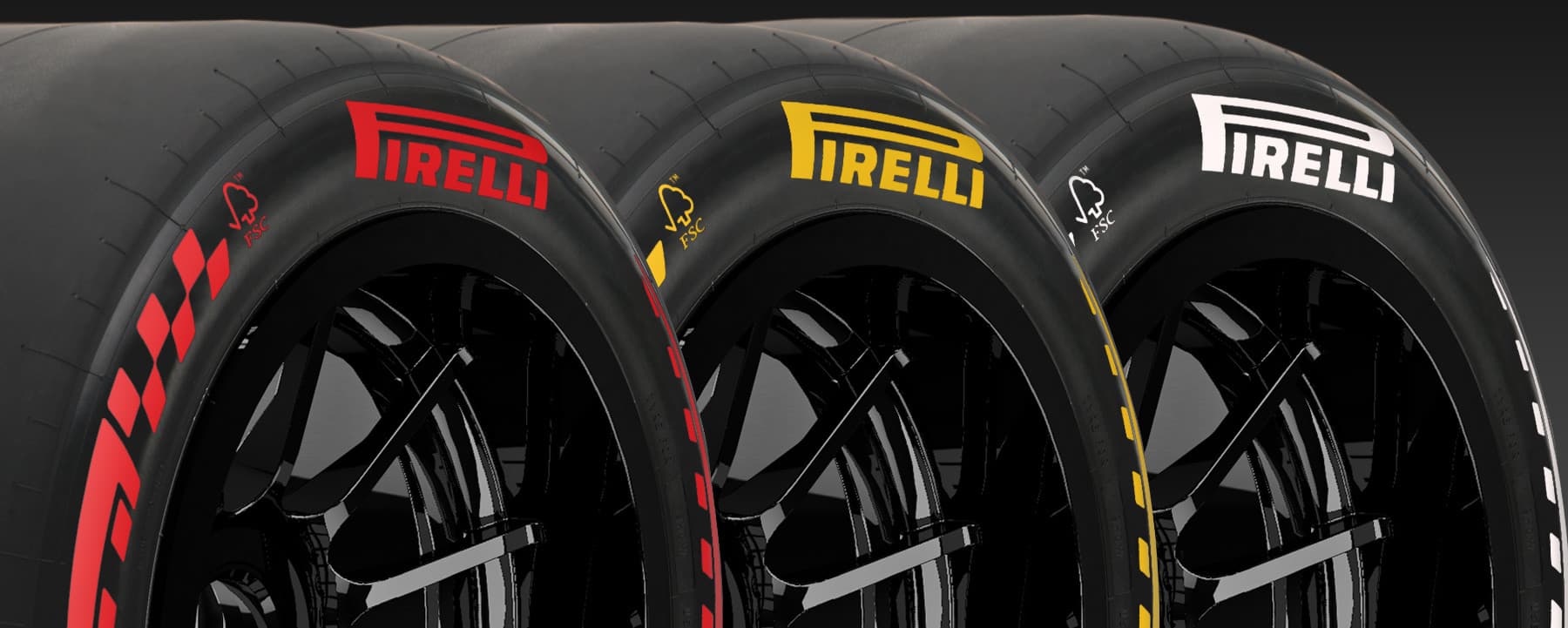
The three colors you see on broadcast are simple: red means soft, yellow means medium, white means hard. But here's the part most new fans miss — those colors are relative to that specific weekend's compound selection, not absolute. Pirelli maintains a full scale of five compounds for the 2026 season, ranging from C1 (hardest and most durable) to C5 (softest and fastest). For each Grand Prix, three compounds from that range are nominated. Whichever is the softest gets the red stripe, the hardest gets white, and the middle option gets yellow.
So if a race uses C3, C4, and C5, the C5 gets the red marking. At a different circuit using C1, C2, and C3, the C3 gets red instead. The color tells you the relative grip level within that weekend's selection, not where it sits across the full compound range. Once that clicks, the strategy conversation starts to make a lot more sense.
When it rains, two entirely different tires enter the picture. Green intermediates handle damp or drying conditions, dispersing roughly eight gallons of water per second per tire. Blue full wets are built for heavy rain, moving up to 22 gallons per second. These aren't part of the pre-race strategy plan — they're reactive calls based on what the track surface is doing in the moment.
How F1 tires differ from road tires
The first thing that jumps out when you look at an F1 tire is the absence of grooves. There's no tread pattern at all on a dry-weather slick. That's intentional: maximizing the rubber contact patch on a dry surface generates more grip through sheer surface area. Road tires channel water because they operate in all conditions; F1 slicks are optimized purely for dry grip, which is why they become dangerous the moment standing water appears on track.
The 18-inch wheel specification, introduced with the 2022 regulation overhaul and refined for 2026, changed how these tires behave fundamentally. Shorter sidewalls mean stiffer construction, near-instant turn-in response, and less flex through high-speed corners. The tradeoff is real: less cushioning from the sidewall meant teams had to revise their suspension setups significantly. For 2026, Pirelli narrowed the front tread width by 25mm and the rear by 30mm, accommodating the lighter and more agile cars the new regulations produce.
One structural element worth understanding: every team runs the exact same Pirelli tires. There's no tire manufacturer battle. The playing field starts level on rubber, which means how a team manages what Pirelli supplies — temperature, stint length, compound selection — becomes a genuine differentiator.
Degradation: why F1 tires wear out
Two failure modes show up most often. Graining happens when tires run outside their optimal temperature window, typically too cold, or when the driver overworks the surface through excessive sliding. The rubber tears and partially refolds, and grip fades progressively. Drivers can sometimes push through graining as heat builds, but it's a race against time.
Blistering is the opposite problem: the rubber overheats from inside, the layers separate, and large chunks shear away. Blistering causes sharp, sudden grip loss and often forces an immediate pit stop. Both cost lap time, but the tactical responses are different: push through versus pit immediately.
Progressive wear is the third mechanism and the most constant. As rubber thins through friction, the tire stiffens, slides more, and generates heat faster — a vicious cycle that accelerates as a stint extends. A tire losing 0.1 to 0.2 seconds per lap across a 20-lap stint can be the difference between a winning strategy and falling through the field.
Every compound has an optimal temperature window. Below it, graining risk climbs. Above it, blistering becomes a threat. When drivers radio saying they're trying to "get the tires in the window," they're describing exactly this process.
Tire allocation and the rules
Each driver receives 13 sets of dry slicks for a standard Grand Prix weekend: 2 hards, 3 mediums, and 8 softs, plus 5 intermediates and 2 full wets. Drivers must return sets after each practice session, leaving only 7 sets for qualifying and the race. This scarcity is why teams treat soft tires carefully on Friday.
The FIA requires drivers to use at least two different slick compounds during the race, forcing a minimum of one pit stop. Teams must decide when to make that compound switch, which tires to pair together, and how to manage stint lengths. A common approach is starting on softs to build early position, then transitioning to mediums or hards for a long final stint.
Friday practice is a data-collection exercise focused on degradation. Teams run extended stints on multiple compounds, log the lap-time delta, and feed that into their strategy models. Pirelli announces compound selections at least two weeks before each race, giving teams time to run simulations before arriving at the circuit.
How to follow tire strategy during a live race
The on-screen tire graphic and lap counter are your two main tools. When a car's tire indicator shows a compound that's been running for 15 laps and a rival pits on lap 16, that's an undercut attempt in real time. When a car stays out several laps longer than expected, they're running an overcut.
The undercut works by pitting before your rival: you get fresh rubber, lap faster on a lighter car, and emerge in front when they eventually pit. The overcut flips this — you stay out while a rival pits, take advantage of your lighter fuel load, and cross the line ahead when they exit the pits. Both moves hinge entirely on how each compound is behaving on that specific track on that specific day.
The best way to watch F1 tires in action is coming into the race with context already loaded. Which three compounds did Pirelli select? Which is likely to degrade fastest? What's the predicted pit window based on Friday's long runs? Those questions have answers before Sunday's formation lap — and knowing them turns the race into a chess match you can follow move by move. See How F1 Tire Strategy Works for our detailed strategy guide.
Watch the strategy unfold with GridLine Club
Formula 1 tires are far more than rubber. The color on the sidewall tells you the compound. The compound tells you the stint plan. The stint plan tells you when the race will be decided. Now that you can distinguish graining from blistering, understand the two-compound rule, and read a pit window as it opens, watching a Grand Prix becomes a completely different experience.
Every race weekend, we break down the tire selection, explain what compounds each team is likely to favor, and walk through the strategy scenarios before lights out. Check out our articles and How It Works section to never watch a pit stop without context again.