
Max Verstappen Retirement: What We Know So Far
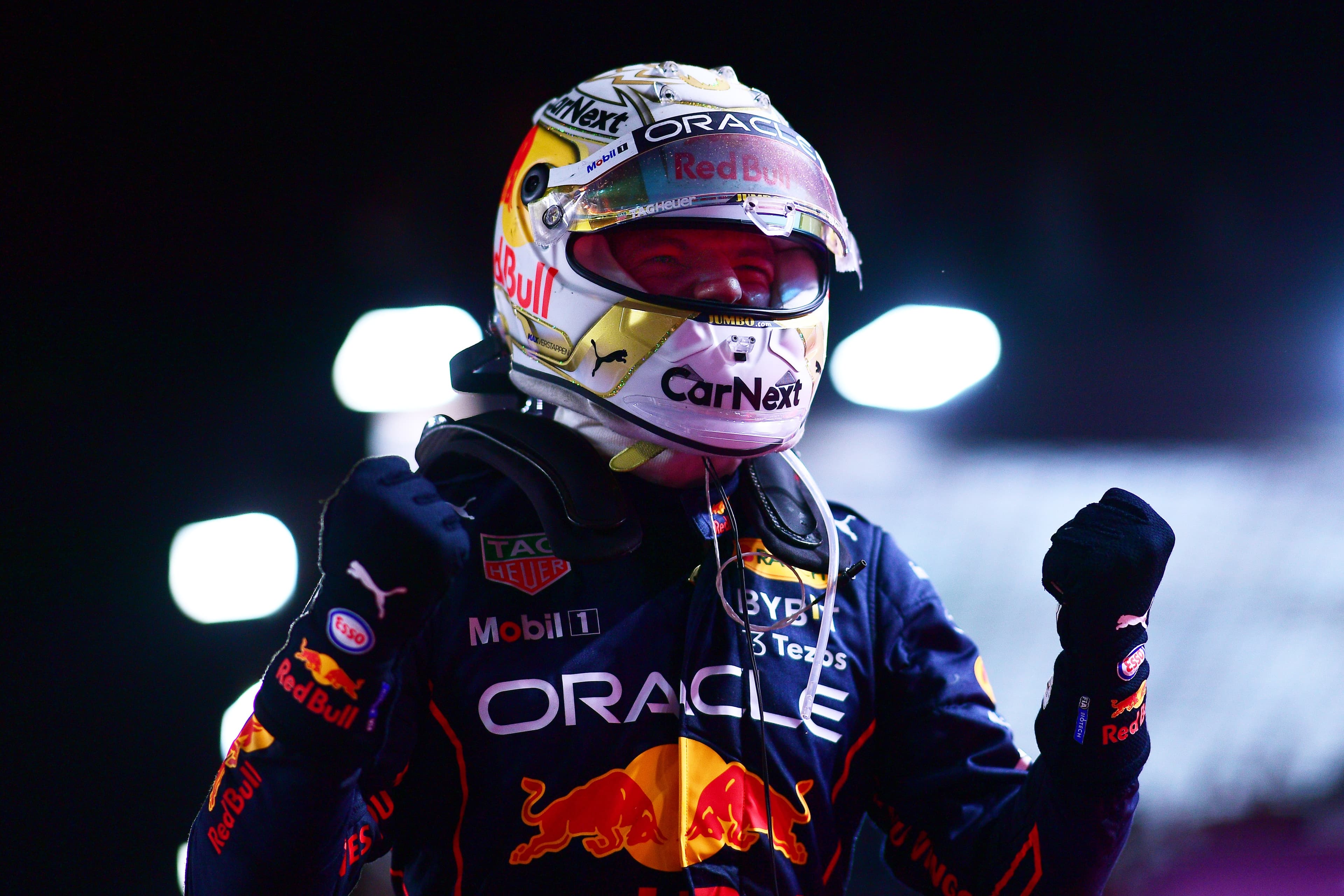
The Verstappen retirement question became impossible to ignore after Max Verstappen finished eighth at the 2026 Japanese Grand Prix and sat down with BBC Sport's Jenny Gao. When asked directly whether he planned to walk away from Formula 1 at the end of the year, he didn't deflect or joke. He said, "That's what I'm saying. I'm thinking about everything inside this paddock." That's not a frustrated driver venting after a bad race. That's a four-time world champion telling you he means it.
What makes this different from the usual end-of-season noise is the pattern behind it. Verstappen has been saying versions of this for over a year. The 2026 regulations arrived, he drove the car, and nothing changed his assessment. For anyone following the championship picture through outlets like GridLine Club, the Verstappen retirement story is now an active storyline that reshapes how you read every result between now and August.
This piece covers the full picture: what he actually said, what his contract does and doesn't guarantee, why he's genuinely considering leaving, how Red Bull responded, where Mercedes fits in, and who's next in line if F1's most dominant driver of the last four years decides he's done.
What Verstappen actually said, and what he meant
The BBC Sport interview after Japan gave us the clearest statement yet. Verstappen explained his thinking in full: "Privately I'm very happy. But you look at a season with 22 races, normally 24, and you start to think, is it worth it? Or do I enjoy being more at home with my family and seeing my friends more when you're not enjoying your sport?" He also removed the simplest counter-argument anyone could make: "You can make a lot of money, great. But at the end of the day it's not about money anymore because this has always been my passion."
He also went out of his way to clarify that the results themselves aren't the core issue. "I can accept being in P7 or P8. I know you can't always be dominating or fighting for a podium. I've been there before." That line matters. This isn't a driver sulking over losing. It's a driver questioning whether the version of racing he's being asked to do is the version he signed up for.
Go back further and the trajectory is clear. During Bahrain testing earlier in 2026, he said: "The current regulations are not helping the longevity of my career in Formula 1, let's say it like that." And in 2025, before the new rules even arrived: "If they are not fun, then I don't really see myself hanging around." This isn't a sudden outburst. It's a progression of increasingly direct honesty over 18 months. The 2026 cars arrived and confirmed his concerns rather than resolved them, he has even referenced specific incidents like his frustrating retirement in China that fed into his thinking in his own words.
Verstappen retirement and the contract: what the 2028 deal actually means
The headline fact is that Verstappen is under contract with Red Bull through the end of 2028. The deal is reportedly worth $55 million per year and has been described as one of the longest-running contracts ever negotiated in Formula 1. On paper, he's going nowhere. But contracts in F1 are rarely as clean as the headline date suggests.
Verstappen's deal includes performance-based exit clauses tied to championship position at the summer break. The reported structure allows him to activate an early departure if he falls outside the top two by the 2026 summer break, with similar benchmarks attached to subsequent seasons. These clauses give Verstappen structured windows to leave ahead of the 2028 expiry if the competitive picture doesn't meet defined thresholds.
Exit clauses
Helmut Marko disputed the specific details when pressed, saying "None of that is true." Reporting from outlets including Auto Motor und Sport and The Race has pointed to mechanisms of this type existing within the deal. With Verstappen sitting outside the top two after Japan, that conversation remains very much alive going into the summer break. Red Bull figures have publicly pushed back on the speculation, as the team hierarchy sought to calm the headlines in their response to the retirement talk.
Contract implications for 2026 and 2027
The practical consequence is that the summer break doesn't just matter for the championship standings. It matters as a potential trigger point for one of the most significant driver market decisions in recent memory. Red Bull cannot simply point to the 2028 date and consider the matter closed.
Why the 2026 season is breaking the appeal
The 2026 regulations introduced a heavily revised power unit with significantly higher electrical output, active aerodynamics, and a driving philosophy built around energy management and smoothness. That description sits almost directly opposite what made Verstappen a four-time champion. His career was built on late-braking aggression and a raw, instinctive relationship with mechanical grip. He described the new cars as "anti-driving," and that framing tells you everything about the mismatch. For readers wanting a deeper technical breakdown, see Understanding the 2026 F1 Regulations | GridLine Club.
The early results reflect it. Sixth in Australia. Eighth in Japan. Eliminated in Q2 at Suzuka. These aren't numbers that define a driver of his calibre; they're the output of a technical package that doesn't reward his natural strengths. For a round-by-round look at what happened in Japan specifically, our coverage includes a full race breakdown and the race weekend preview, Japanese GP 2026: Full Race Breakdown | GridLine Club and Japanese GP 2026: Qualifying & Race Preview | GridLine Club. Red Bull's RB22 is clearly not where it needs to be, but the broader issue is that even a better-performing version of this car asks something fundamentally different from a driver than the cars that made him dominant.
The personal dimension is just as real. Verstappen is now a father. He's spoken openly about wanting more time at home and with people close to him. A 22-race calendar still means the better part of nine months living out of a motorhome and a hotel. When the driving no longer feels natural and a newborn is waiting at home, the calculation shifts. Mika Hakkinen walked away at 33 for overlapping reasons. Jody Scheckter left as reigning champion to prioritise family. Verstappen is 28. The conditions for a similar decision are clearly present.
Red Bull's response and what it doesn't actually address
Team principal Laurent Mekies kept his public response measured and team-focused: "We are having zero discussions about those aspects... I'm sure by the time we give him a fast car, he will be a much happier Max." It's a composed statement, and it probably reflects what the team genuinely believes. Red Bull's default position has always been that performance solves everything.
But the statement has a gap. It addresses the car, not the regulations, and not the personal factors. Red Bull can build a faster RB22, that's well within their capability. What they can't control is whether the 2026 ruleset as a whole starts feeling like racing again to a driver who has already said it doesn't. The team is betting that a competitive car changes the conversation entirely. That's worked with Verstappen before, but the 2026 context is structurally different from any previous rough patch he's navigated inside the team.
The honest read of his comments is that he's not manufacturing leverage. He has no contract to renegotiate. His messaging has been consistent, calm, and delivered without the confrontational edge you'd expect from a tactical play. He's been telegraphing this for over a year with flat, considered delivery. That's not theatre. That's someone who has genuinely started thinking about the exit.
Mercedes, Russell, and whether Verstappen retirement means leaving F1 entirely
The story shifts once you put Mercedes into the frame. Toto Wolff has publicly called Verstappen-to-Mercedes speculation "silly" and stated clearly that the team is fully committed to George Russell and Kimi Antonelli, who hold contracts through 2027 and 2029 respectively. At face value, the door is closed. But Mercedes said similar things during 2025 and the rumours never went away, because the underlying logic never disappeared.
Lewis Hamilton is now at Ferrari. The seat alongside Antonelli at Mercedes represents one of the most attractive drives in the current field, potentially in the strongest car of this regulation era given Mercedes' early-season form. Russell won the Australian GP from pole, took second in China, and sits second in the championship through three rounds, a strong start covered in race reports from the opening round Australian Grand Prix coverage. If Verstappen doesn't retire outright, a move to Mercedes remains the most discussed alternative to his Red Bull situation.
Russell's 2026 campaign is simultaneously his strongest opportunity and his most direct audition. He has the car to contend for a championship. If he converts that into a genuine title fight, his position at Mercedes becomes unassailable. If results plateau and Verstappen becomes available, the organisation faces a real choice. Russell is a polished, precise driver, but this season is the clearest test of whether he can lead a championship challenge at the highest level. The answer to that question affects everything that follows in the driver market.
Verstappen retirement: where this leaves Formula 1
The core facts are on the record. Verstappen has said, publicly, that he's questioning whether F1 is still worth it. His contract carries real exit mechanisms tied to performance benchmarks. His frustration is regulation-based and personal, not simply a reaction to results. Red Bull's response is calm and car-focused but doesn't engage with the deeper drivers of his thinking. And the Mercedes dimension makes this more than a straightforward retirement story.
Verstappen is 28. He has four championships, financial security that outlasts any contract, and a young family at home. The conditions for walking away are present in a way they simply weren't three years ago. Whether he acts on them depends on whether the car improves enough, and whether the 2026 regulations start feeling like racing to him again before the summer break forces a decision.
If neither happens, the Verstappen retirement question stops being hypothetical, and Formula 1 faces its most significant driver market shift in a generation. The 2026 season was already the most consequential in years before this conversation started. Every race between here and the summer break is worth watching closely, and GridLine Club will have the analysis, standings context, and driver market updates you need to stay ahead of how it all unfolds.